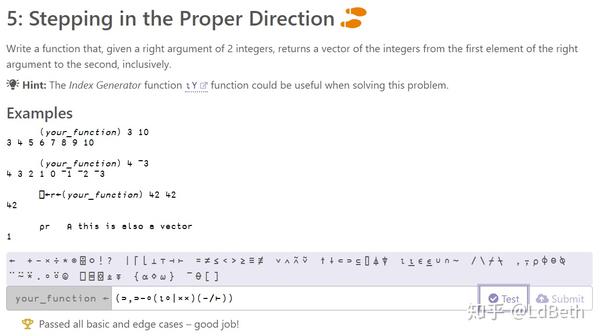
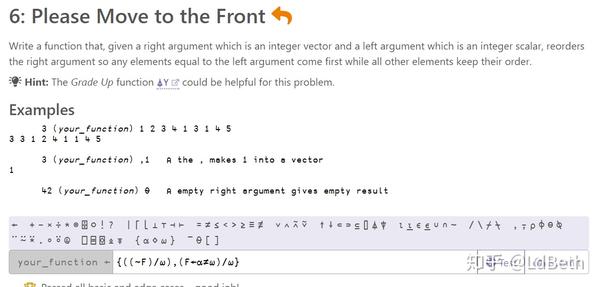
因为我太菜了,虽然其实第一部分都做出来了,但也就想好第一题比较理想的 tacit 解
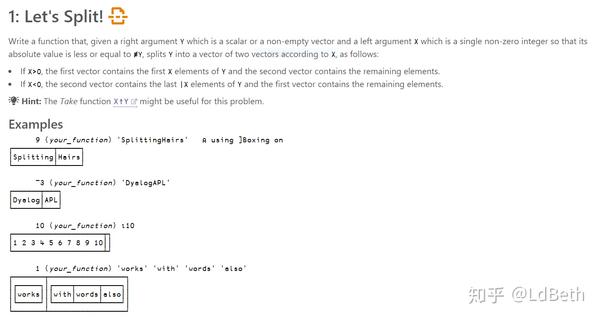
{(⌽⍣(⍺<0))(⍺↑⍵)(⍺↓⍵)}
显然的解。
APLcart 给了个 tacit idiom, 注意用到了 18.0 新出的 Over operator,在 17.1 只能用 $\{\alpha\; \omega\}$
Is(↑,⍥⊂↓)Y ⍝ ←→ Is (↑{⍺ ⍵}↓) Y ←→ Is {(⍺↑⍵)(⍺↓⍵)} Y
但不能直接用上去,因为在 $\alpha$ 是负数的时,结果和要求是反向的
      ¯3 (↑,⍥⊂↓) 'FooBar'
┌───┬───┐
│Bar│Foo│
└───┴───┘
这就是为啥我用了 reverse,并用 power operator 控制,对应 $\alpha <0, \alpha >0$ 两个 case。但用了 power operator 就很难转成 tacit form 了。那么上面的答案要如何写成 tacit 呢。
可以換个角度,在负数时转成正数。假设有 f 做了这个工作,那么
{(a↑⍵)((a←⍺ f ⍵)↓⍵)} ⍝ ←→ {(⍺ f ⍵)(↑,⍥⊂↓)⍵} ←→ f(↑,⍥⊂↓)⊢
那么 f 是什么呢,是这个么?
{⍺|⍨≢⍵}
殘念,并不是,反例:
      6 {⍺|⍨≢⍵} 'FooBar'
0
那就加个 a = #w 的 special case 好了
      812 {⍺⌈⍺|⍨⍵} 812
812
      ¯812 {⍺⌈⍺|⍨⍵} 812
0
⍝ f ←→  (⊣⌈⊣|⍨≢∘⊢) ←→ (⊣⌈|⍨∘≢)
Final answer
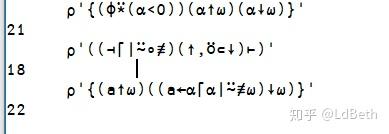
((⊣⌈|⍨∘≢)(↑,⍥⊂↓)⊢) ⍝ ((⊣⌈|⍨∘≢)(↑{⍺ ⍵}↓)⊢) for Dyalog 17.1
附赠第七题解
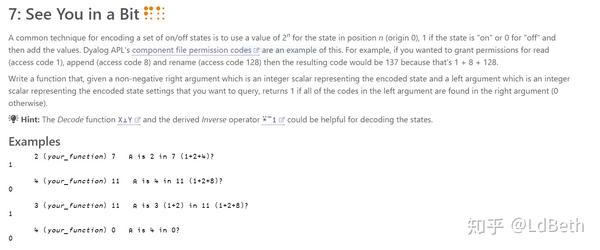
(∧/⊣∊⍥(⍸∘⌽∘(2∘⊥⍣¯1))⊢) ⍝{f←⍸∘⌽∘(2∘⊥⍣¯1) ⋄ ∧/(f ⍺)∊f ⍵} for 17.1
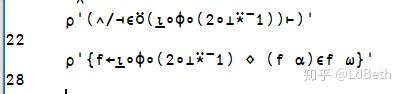
干脆都放上来了
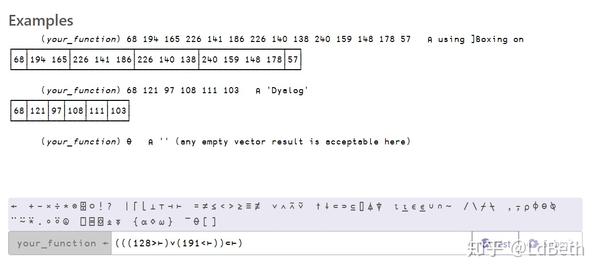
(⊢⊂⍨128∘>∨191∘<)
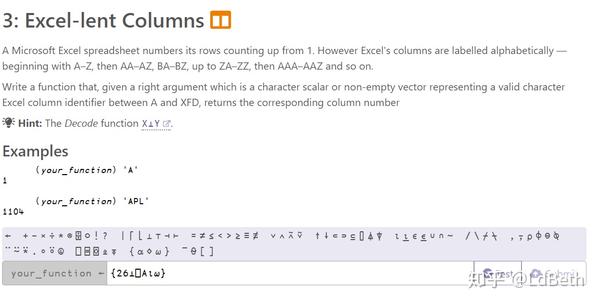
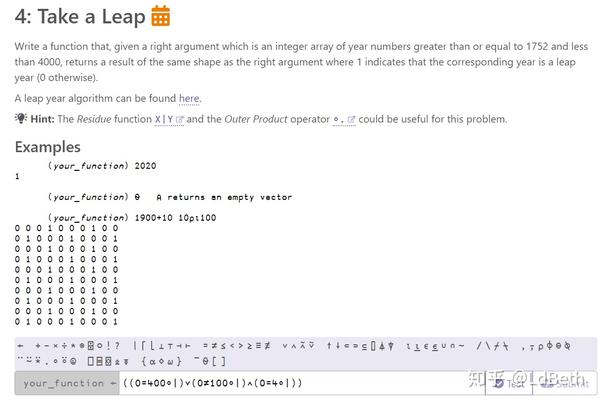
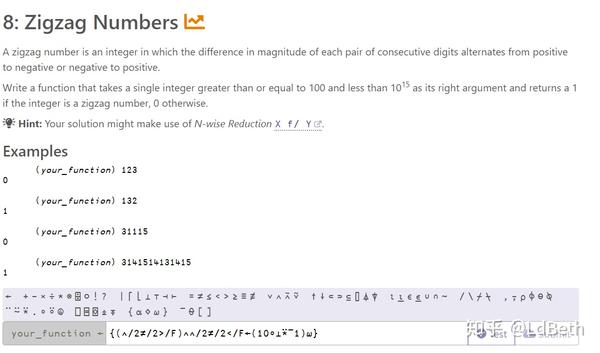
{∧/¯1=2×/×2-/(10∘⊥⍣¯1)⍵}
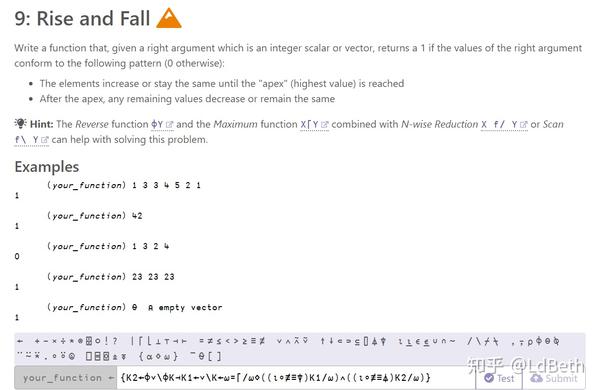
{⍵≡(⌽⌈\⌽⍵)⌊⌈\⍵}